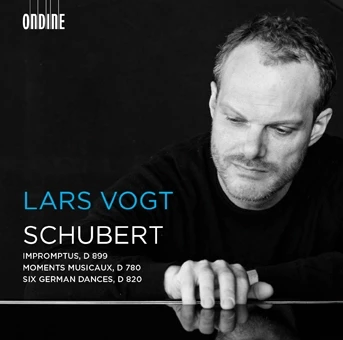
Franz Schubert
Four Impromptus D 899 (Op. 90)
Six German Dances · Moment musicaux D 780 (Op. 94)
Track listing
16 tracks · 65:56Listen to samples on selected tracks.
Franz Schubert
- Four Impromptus D 899 (Op. 90) 28:01
- 1 I Allegro molto moderato 9:57
- 2 II Allegro 4:54
- 3 III Andante 5:37
- 4 IV Allegretto 7:33
- Six German Dances 6:27
- 5 I 0:38
- 6 II 1:08
- 7 III 1:04
- 8 IV 0:52
- 9 V 1:11
- 10 VI 1:34
- Moments musicaux D 780 (Op. 94) 31:28
- 11 I Moderato 6:16
- 12 II Andantino 6:35
- 13 III Allegro moderato 1:58
- 14 IV Moderato 5:27
- 15 V Allegro vivace 2:09
- 16 VI Allegretto 9:03
About this recording
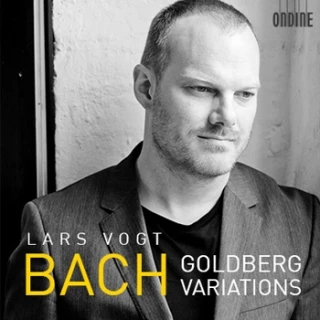
Following Lars Vogt's hugely popular solo debut recording of Bach's Goldberg Variations on Ondine the pianist's new solo recording features much-loved piano works by Franz Schubert (1797-1828).
The Impromptus D 899, Six German Dances D 820 and the famous Moments musicaux were written when Schubert was at the height of his maturity and they contain some of his most well-known pieces for the piano.
Lars Vogt was appointed the first ever “Pianist in Residence” by the Berlin Philharmonic in 2003/04 and enjoys a high profile as a soloist and chamber musician. His debut solo recording on Ondine with Bach’s Goldberg Variations (ODE 1273-2) was released in August 2015 and has been a major critical success. The album’s tracks have also been streamed online over 6 million times.
Features
Sleeve notes in English and German
The artists
Lars Vogt
Born in the German town of Düren in 1970, Lars Vogt came to public attention when he won second prize at the 1990 Leeds International Piano Competition and since then enjoyed a varied career. His versatility as an artist ranged from the core classical repertoire of Mozart, Beethoven, Schumann and Brahms to the romantics Grieg, Tchaikovsky and Rachmaninov through to the dazzling Lutoslawski concerto. During his late years Lars Vogt was increasingly working with orchestras both as conductor and directing from the keyboard. His appointment as Music Director of the Royal Northern Sinfonia at the Sage, Gateshead and Orchestre de chambre de Paris reflected this new development in his career.