Jean Sibelius
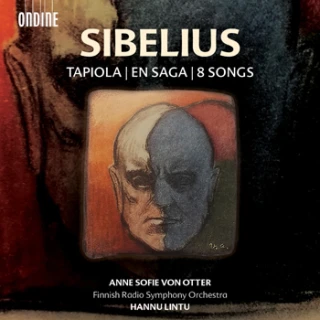
Tapiola, Op. 112 · En Saga, Op. 9 · Eight Songs, orchestrated by Aulis Sallinen
Anne Sofie von Otter, mezzo-soprano · Finnish Radio Symphony Orchestra · Hannu Lintu, conductor
Info & buy
Jean Sibelius
Johanna Rusanen-Kartano, soprano
Ville Rusanen, baritone
Estonian National Male Choir
The Polytech Choir
Finnish Radio Symphony Orchestra
Hannu Lintu, conductor
Listen to samples on selected tracks.
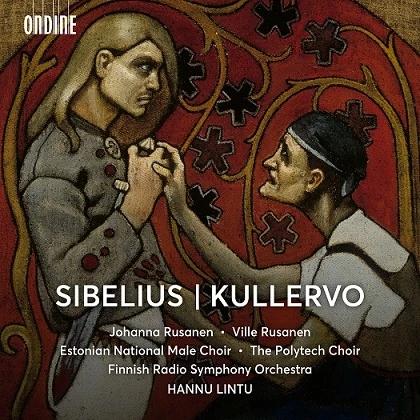
A fresh new recording of Jean Sibelius’ (1865–1957) early breakthrough work by the Finnish Radio Symphony Orchestraunder its conductor Hannu Lintu. This recording with two male choirs, the Estonian National Male Choir and the Polytech Choir, brings up the full drama of this gigantic 70-minute work which during Sibelius’ lifetime was often referred to as a “symphony”. The work tells the story of Kullervo, a tragic hero drawn from the Finnish national epic, theKalevala.
While a student in Vienna, Sibelius started planning to write a large work that would crystallize the rising Finnish national feeling in music. It was in the cosmopolitan surroundings of Vienna where Sibelius finally discovered the Finnish sound for his orchestral works to follow. Until that moment the art music of his country, even works based on folklore characters such as found in the Kalevala poetry, had been largely influenced and dominated by German Romanticism. For his work Sibelius drew inspiration from traditional Finnish folk music and by studying the Kalevalaepic on his own. From the 50 songs of the Kalevala, Sibelius chose passages from the most tragic sections of the work telling the story of Kullervo, an ill-fated young man. With the premiere of this work in Helsinki in 1892, Sibelius became a national hero – and also won the favour of his future father-in-law. Although the work was not performed never again in Sibelius’ lifetime after the following year, the work was a milestone for Sibelius himself in his development as a composer and a symphonist. It was the composer’s first serious attemp in composing a large-scale orchestral work. Kullervo is work by a young composer filled with inspiration, ideas and drama.
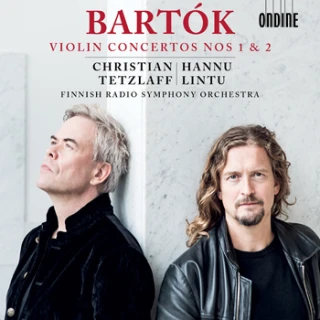
Conductor Hannu Lintu recently won the Gramophone Award and ICMA Award for his recording of the Bartók Violin Concertos (ODE 1317-2) together with Christian Tetzlaff and the Finnish Radio Symphony Orchestra. The same recording was also nominated for the 2019 BBC Music Magazine Awards. Recordings by the Finnish Radio Symphony Orchestra under Hannu Lintu on Ondine have gathered excellent reviews in the international press. Two of their recordings were nominated for Gramophone Awards in 2018. One of them, including orchestral works and songs by Jean Sibelius (ODE 1289-5) also won an ICMA Award in January 2018. The recent recording of Lutoslawski’s 1st and 4th Symphonies (ODE 1320-5) was chosen ‘Recording of the Month’ by the BBC Music Magazine in February 2019.
Sleeve notes and lyrics in English and Finnish.
Johanna Rusanen-Kartano began her vocal studies at the Sibelius Academy in Helsinki and undertook additional training in Berlin and Vienna. In 1995, she won the Timo Mustakallio Singing Competition and the Lappeenranta National Singing Competition in 1996. Johanna Rusanen-Kartano was awarded a scholarship by the Deutsche Oper Berlin in 1998-2000, and in 2001 she won the Karita Mattila prize.
First prize winner of the 2004 Lappeenranta Solo Voice Competition, Finnish baritone Ville Rusanen began his musical studies as an instrumentalist, playing the double bass at Kuopio Conservatory where he also studied singing under Pertti Rusanen. He moved to the Sibelius Academy to study singing in 1999 where he was taught by Jorma Hynninen, and then later by Päivi Nisula.
Estonian National Male Choir (also known as RAM) was established by Estonian choral music legend, conductor and composer Gustav Ernesaks. Having sung mostly a cappella during its early years, RAM has grown into a world-famous professional choir that often performs large symphonic compositions. Estonian National Male Choir also frequently records for Estonian National Broadcasting.
Jean Sibelius
Anne Sofie von Otter, mezzo-soprano · Finnish Radio Symphony Orchestra · Hannu Lintu, conductor
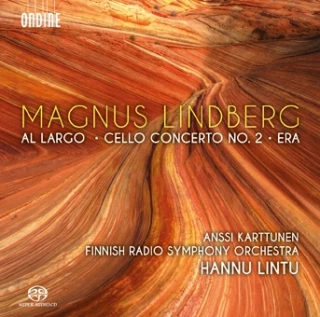
Info & buyMagnus Lindberg
Anssi Karttunen, cello · Finnish Radio Symphony Orchestra · Hannu Lintu, conductor
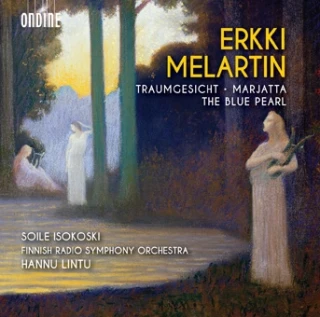
Info & buyErkki Melartin
Soile Isokoski, soprano · Finnish Radio Symphony Orchestra · Hannu Lintu, conductor
Info & buyBéla Bartók
Christian Tetzlaff, violin · Finnish Radio Symphony Orchestra · Hannu Lintu, conductor
Info & buy