Get a free album when you join our newsletter. Sign up
Einojuhani Rautavaara
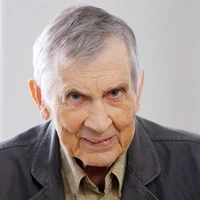
© Heikki Tuuli

Composer

Einojuhani Rautavaara

1928-2016

Einojuhani Rautavaara (9.10.1928-27.7.2016) is after Sibelius one of the best known and most frequently performed Finnish composers internationally. Rautavaara was by nature a romantic, even a mystic, as was apparent from the titles of his works: for example Angels and Visitations for orchestra or his double-bass concerto Angel of Dusk. Despite Rautavaara's label of "mysticism" his works cannot be categorized in stylistic terms.

Biography Works Discography

At the age of seventeen Rautavaara began studying the piano and later went on to study musicology at Helsinki University and composition at the Sibelius Academy. From 1951-53 he was a pupil of Aarre Merikanto receiving his diploma in composition in 1957. In 1955 the Koussewitzky Foundation awarded Jean Sibelius a scholarship in honour of his 90th birthday to enable a young Finnish composer of his choice to study in the United States. Sibelius selected Rautavaara who spent two years studying with Vincent Persichetti at the Juilliard School of Music in New York and also took part in the summer courses at Tanglewood given by Roger Sessions and Aaron Copland. In 1957 Rautavaara continued his studies with Wladimir Vogel in Ascona, Switzerland and a year later with Rudolf Petzold in Cologne. Rautavaara has taught and lectured at the Sibelius Academy as the professor of composition. Since 1988 he made his living as a composer in Helsinki.

Rautavaara's earliest works revealed close ties to tradition but also his desire to renew it. They were followed by an extreme constructivist and avant-garde phase (as in the serially organized fourth symphony "Arabescata", 1962) after which Rautavaara turned to hyper-romanticism and finally mysticism. Since the early 1980s, Rautavaara adopted a sort of post-modern musical language in which modern and traditional elements of varying degrees of constructivism or freedom were combined with one another.

Rautavaara composed eight symphonies, the most frequently performed of them being the Angel of Light, his seventh symphony. Symphony No. 8, The Journey was premiered in April 2000 by The Philadelphia Orchestra under Wolfgang Sawallisch. Other important groups of works include concertos for different solo instruments, among them the three piano concertos, two cello concertos, the popular Violin Concerto (1977), the Harp Concerto (2000) and the Clarinet Concerto (2001-02). Rautavaara has also written a large body of chamber music as well as choral and vocal works including All-Night Vigil for a cappella chorus and Missa a cappella. One of Rautavaara's most popular works is Cantus arcticus, concerto for birds and orchestra, in which the straightforward orchestral part is juxtaposed with the sounds of birds recorded by the composer himself. Rautavaara's final orchestral works, published by Boosey & Hawkes, include Manhattan Trilogy (2004), Book of Visions (2005), Before the Icons (2005), and A Tapestry of Life (2007).

Apart form his symphonies (ODE 1145-2Q) and concertos (ODE 1156-2Q), the central pillars of Rautavaara's extensive oeuvre are his operas. With Vincent (1985-87) and The House of the Sun (1990) Rautavaara scored a notable international success. Aleksis Kivi (1995-96) was premiered at the Savonlinna Opera Festival in 1997 and it has been performed in Cosenza, Italy and Minneapolis, U.S.A since then. His final stage work, Rasputin (2001-2003) is an opera about the life of mystic and healer Grigory Rasputin. Rautavaara's first opera, Kaivos (1963), was staged for the first time in Budapest, Hungary, in 2016, soon after the composer's death. A recording of the opera released by Ondine (ODE 1174-2) earned a Grammy nomination in 2012.

Works

  • Vincent - Opera in Three Acts
  • Tätä matkaa kestää
  • True & False Unicorn
  • Thomas - Opera in Three Acts
  • The House of the Sun - Opera in Two Acts
  • Symphony No. 4 "Arabescata" (1962)
  • Suite for Strings (1952)
  • Sydämeni laulu
  • String Quartet No. 2 (1958)
  • String Quartet No. 1 (1952)
  • True & False Unicorn (A Tapestry of Voices, 2000) - excerpt
  • Sonata No. 2, Op. 64 "The Fire Sermon"
  • Sonata No. 1, Op. 50 "Christus und die Fischer"
  • Sommarnatten (Summer Night)
  • Praktisch Deutsch
  • Pelimannit (The Fiddlers), Op. 1 (1952)
  • Ostrobothnian Polska (1993)
  • On the Last Frontier
  • Och glädjen den dansar (With the Joy We Go Dancing)
  • Nirvana Dharma
  • Morsian (The Bride)
  • Lähtö (Departure)
  • Ludus verbalis
  • Katedralen (The Cathedral)
  • Lintukoto (Isle of Bliss) (1995)
  • Iltarukous (Evening Prayer) (1953)
  • Icons, Op. 6
  • Halavan himmeän alla (In the Shade of the Willow) (1998)
  • Garden of Spaces
  • Etudes, Op. 42
  • Divertimento (1953)
  • Einojuhani Rautavaara in conversation with Vladimir Ashkenazy
  • Die erste Elegie (The First Elegy)
  • Concerto for Harp and Orchestra (2000)
  • Come un sogno
  • Canto IV (1992)
  • Canto III (1972)
  • Canto II (1961)
  • Canción de nuestro tiempo (Song of Our Time)
  • Canto I (1960)
  • Book of Visions (2005)
  • Autumn Gardens (1999)
  • Apotheosis (1996)
  • Angels and Visitations (1978)
  • Anadyomene (Adoration of Aphrodite) (1968)
  • A Finnish Myth (1977)
  • String Quintet (1997) "Unknown Heavens"
  • Die Liebenden - Song cycle for voice and string quintet (1959/ar
  • Three Songs from the Opera Aleksis Kivi (1997)
  • Symphony No. 7 "Angel of Light" (1994)
  • Three Sonnets of Shakespeare (1951/2005)
  • Fünf Sonette an Orpheus (Five Sonnets to Orpheus) (1955-56/1960)
  • Die Liebenden (The Lovers) (1958-59/1964)
  • Credo (1972)
  • Canticum Mariae Virginis (1978)
  • Magnificat (1979)
  • Nattvarden (Communion) (1963)
  • Ave Maria (1957)
  • Rakkaus ei koskaan häviä (Charity Never Faileth) (1983)
  • Legenda (Legend) (1985)
  • Avuksihuutopsalmi (Psalm of Invocation) (1972)
  • Ehtoohymni (Evening Hymn) (1972)
  • A Requiem in Our Time (1953)
  • Playgrounds for Angels (1981)
  • Tarantará (1976) for Solotrumpet
  • Independence Fanfare (1992)
  • Octet for Winds (1962)
  • Hymnus (1998) for trumpet and organ
  • Symphony No. 1 (1955-56/1988)
  • Symphony No. 2 (1957/1984)
  • Hommage à Liszt Férenc (1989)
  • An Epitaph for Béla Bartók (1986)
  • Hommage à Kodály Zoltán (1982)
  • Adagio Celeste for String Orchestra (2000)
  • Manhattan Trilogy (2004)
  • Lauluja (The Singer) (1956)
  • Syksy virran suussa (Autumn at the Rivermouth) (1965/1995)
  • Two Preludes of T.S. Eliot (1956/1967)
  • Kaksi psalmia (Two Psalms) for male choir (1968/1971)
  • Joulun virsi (Christmas Hymn) for male choir (1953)
  • Joulun virsi (Christmas Hymn) for mixed choir (1953/1978/1995)
  • Elämän kirja (A Book of Life) (1972)
  • Neljä laulua Aleksis Kiven runoihin (Four Songs to Poems by Alek
  • Lehdet lehtiä (Leaves are Leaves) (1985)
  • Neljä serenadia (Four Serenades) (1978)
  • Hammarskjöld-fragment (Hammarskjöld Fragment) (1975)
  • Isontalon Antti ja Rannanjärvi (Antti Isotalo and Rannanjärvi) (
  • Hallin Janne (Janne of Halli) (1973)
  • Kaksi psalmia (Two Psalms) for mixed choir (1968/1971)
  • Kettu ja sairas kukko (The Fox and the Sick Cockerel) (1975)
  • Neljä romanssia oopperasta Rasputin (Four Romances from the Oper
  • Symphony No. 8 "The Journey" (1999)
  • Symphony No. 3 (1961)
  • Symphony No. 1 (1956/1988/2003)
  • Symphony No. 6 "Vincentiana" (1992)
  • Symphony No. 5 (1986)
  • Concerto for Clarinet and Orchestra (2001)
  • Concerto for Piano and Orchestra No. 1 (1969)
  • Concerto for Piano and Orchestra No. 2 (1989)
  • Concerto for Piano and Orchestra No. 3 "Gift of Dreams" (1998)
  • Concerto for Violin and Orchestra (1977)
  • Concerto for Double Bass and Orchestra "Angel of Dusk"
  • Concerto for Birds and Orchestra "Cantus Arcticus" (1972)
  • Ballad for Harp and Strings (1973/1981)
  • Concerto for Flute and Orchestra "Dances with the Winds" (1975)
  • Concerto for Organ, Brass Quintet and Symphonic Wind Orchestra "
  • Before the Icons (1955/2005)
  • A Tapestry of Life (2007)
  • Vigilia (All-night vigil for the feast of St John the Forerunner
  • The Myth of Sampo - Choral Opera in One Act
  • Kaivos (The Mine) - Opera in Three Acts (1962)
  • Aleksis Kivi - Opera in Three Acts (1996)
  • Rasputin - Opera in Three Acts (2003)
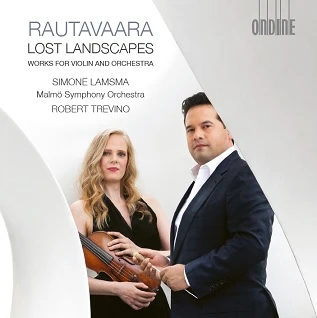
  • Lost Landscapes, for violin and piano (2005)
  • Summer Thoughts, for violin and piano (1972/2008)
  • April Lines, for violin and piano (1970/2006)
  • Notturno e danza, for violin and piano (1993)
  • Variétude, for solo violin (1974)
  • Dithyrambos, for violin and piano (1970)
  • Pelimannit (The Fiddlers), Suite for piano based on traditional
  • Marjatta matala neiti (Marjatta the Lowly Maiden) - A Finnish My
  • Suite de Lorca (1973)
  • Lorulei (1973)
  • Viatonten valssi (Waltz of the Innocents) (1973/1982)
  • Wenn sich die Welt auftut (1996)
  • Concerto for Cello and Orchestra No. 1 (1968)
  • Modificata (1957/2003)
  • Concerto for Cello and Orchestra No. 2 "Towards the Horizon
  • Concerto for Percussion and Orchestra "Incantations" (
  • Rakkaus ei koskaan häviä (Love never dies) (1983)
  • Two Psalms
  • Psalm of Invocation (1972)
  • Lorca Suite (1973)
  • Missa a cappella
  • Psalm of Invocation
  • Evening Hymn
  • Ave Maria, gratia plena
  • Rubáiyát
  • Balada
  • Four songs from opera Rasputin
  • Canto V
  • Missa Duodecanonica (1963)
  • Missa duodecanonica
  • Angel of Light excerpt

Discography (extract)

Full discography (67)

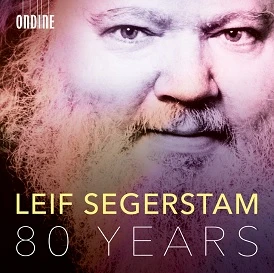
Leif Segerstam 80 Years

(Digital Album)

Helsinki Philharmonic Orchestra · Turku Philharmonic Orchestra · Danish National Radio Symphony Orchestra · Bergen Philharmonic Orchestra

ODE 1470-2 · May 2024

Info & buy