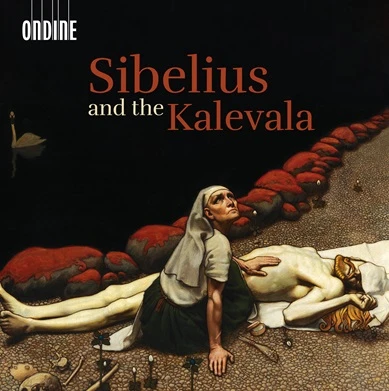
Track listing
21 tracks · 222:52Jean Sibelius
- Lemminkäinen Legends, Op. 22
- 1 IV. Lemminkäinen's Return 6:31
- 2 I. Lemminkäinen and the Maidens of the Island 15:56
- 3 En Saga, Op. 9 (1892/1901) 18:40
- 4 The Oceanides, Op. 73 11:25
- 5 Pohjola's Daughter, Op. 49 13:43
- Lemminkäinen Legends, Op. 22
- 6 III. Lemminkäinen in Tuonela 16:19
- 7 Kaiutar, Op. 72/4 3:12
- 8 Luonnotar, Op. 70 8:53
- Lemminkäinen Legends, Op. 22
- 9 II. The Swan of Tuonela 9:07
- Kullervo, Op. 7 72:28
- 10 I. Introduction. Allegro moderato 12:39
- 11 II. Kullervo's Youth. Grave 15:18
- 12 III. Kullervo and His Sister. Allegro vivace 23:01
- 13 IV. Kullervo Goes to War. Alla marcia (Allegro vivace) 9:26
- 14 V. Kullervo's Death. Andante 12:00
- 15 Venematka (The Journey by Boat), Op. 18 No. 3 1:49
- Kyllikki, Op. 41 12:18
- 16 I. Largamente - Allegro 3:04
- 17 II. Andantino 6:05
- 18 III. Comodo 3:09
- 19 Tapiola, Symphonic Poem for Orchestra, Op. 112 19:21
- 20 Väinön virsi (Väinö's Song), Op. 110 (1926) 9:48
- 21 Laulu Lemminkäiselle (Song to Lemminkäinen), Op. 31/1 3:26
About this recording
“I think that the Kalevala is very modern. In my opinion it is all music: a theme and variations.” – Jean Sibelius
It was during his study years in Vienna when Jean Sibelius (1865–1957) first read and discovered Finland’s national epic the Kalevala, compiled by Elias Lönnrot in 1835. Soon afterwards, Sibelius was celebrated in Finland for his Kullervo symphony, a breakthrough work based on one of the tragic stories from the Kalevala. Sibelius immersed himself with these ancient stories and just few years later wrote his Lemminkäinen Legends. Also his En Saga, although the composer both admitted and later denied its connections with the Kalevala, contains clear elements from Karelian folk music. It did not take long when Sibelius’ music became almost entirely associated with the national epic. To avoid this, the composer quickly distanced himself from the epic by giving more neutral titles to his works from the 1900s onwards. Still, the world of the Kalevala never totally left him: one of Sibelius’ most modern creations, his tone poem Luonnotar (1913) for soprano and orchestra, his Impressionistic The Oceanides (1914), as well as some of his final works, including his symphonic testament Tapiola from 1926, are looking back into the themes of the Kalevala. This digital album combines together some of Sibelius’ finest compositions inspired by the legends of the Kalevala.